Arriving
Travel
There are three routes to Big Bear:
The Front Way: Highway 330/18 through Running Springs is the fastest and easiest route, however, it can get congested on weekends and busy holidays. Closes often in the Winter due to snow and slides.
The Back Way: Highway 38 through Redlands is a bit longer, but is the most scenic and often has less traffic than Hwy 330/Hwy 18.
The Desert Way: Highway 18 through the Lucerne Valley gets less snowfall during storms and has the least amount of mountain driving. However, from LA it’s the most miles.
You can check the road conditions with DOT by clicking the highway numbers above. We’ve also found this report from Snow Summit gives good winter information. From November to April you may get a ticket if you aren’t carrying chains so you’ll want to have them with you at all times. Big Bear publishes these snow driving tips as well.
Big Bear’s elevations starts at 6750′ (on the lake) and goes up to 9000′ if you’re skiing the highest lifts. If you’re sensitive to altitude sickness (like our kids can be), you’ll want to drink plenty of fluids on the way up the mountain and after you arrive.
Upon Arrival
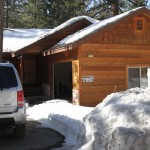 In the winter months, street parking is not allowed to ensure the plows can clear the snow.
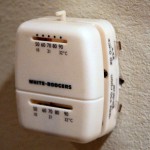 If it’s cold, the thermostat is located in the hallway. Set it to 68 or so using the top needle (the right side settings should always be left on Auto and Heat) and it will warm up in a few minutes.
The heater should never be turned off when it’s cold outside. The lowest setting should be 55 degrees which will prevent the pipes from freezing. The cabin does not have air conditioning.
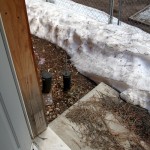 The water will be turned off when you arrive (which prevents the pipes from freezing in the cold weather). It’s easy to turn the water on. Open the back door to the garage and you should see the stop and waste valve.
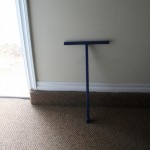 The tool for turning the valve should be just inside the garage door.
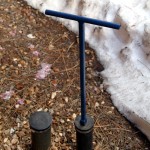 Fit the tool to the top of the stop and waste valve and then give the tool a quarter turn counter-clockwise to restore water to the house. You’ll feel the valve stop at a quarter turn–be sure not to force it past it’s natural stop.
The water will be running in the cabin now at several faucets and once the air is out of the lines you’ll want to turn those off.
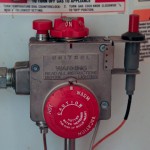 The last thing to do is turn up the water heater which can be found in the tall closet in the mud room. When you arrive it should be set to “Vacation” and that would mean very cold showers in the morning. Turn it to the middle indent and it will have warm water for you in less than an hour.
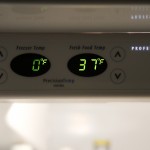 The refrigerator and freezer are set at the correct temperatures. Adjusting them below the preset range may cause the compressors to burn out (due to the altitude).
We have some staple food supplies in the kitchen cupboards and pantry. Feel free to use anything that is there. If you use up a lot of a supply, please replace it before you leave.
The living room has a wood-burning fireplace for your enjoyment. Make sure to open the flue before starting a fire (push the lever back). To keep the smoke flowing up the chimney rather than into the cabin, you’ll want to start with a small kindling fire and slowly build it up. That warms the air in the chimney shaft and gets the fire venting properly.
And, enjoy your stay.